Much a Movie!: movie review: easy a

  • Subscribe to our RSS feed.
  • Twitter
  • StumbleUpon
  • Reddit
  • Facebook
  • Digg

Thursday, 7 February 2013

#SixSeasonsAndAPremiere!: Community Season Premiere Liveblog!

Posted on 16:29 by Unknown
Hey! Guess what?

Community is back - sure, October 19th was a long time coming, but it's finally here!


We covered the season 3 finale for you last spring, and we're here to take on this season's premiere tonight.

There are a tonne of questions to be answered this season (regardless of how complete the last year's finale was) and we'll get that ball rolling promptly at 8 pm!

how will dan harmon's departure affect the show?
how does the dreamatorium work now that it's been re-scaled and modeled?
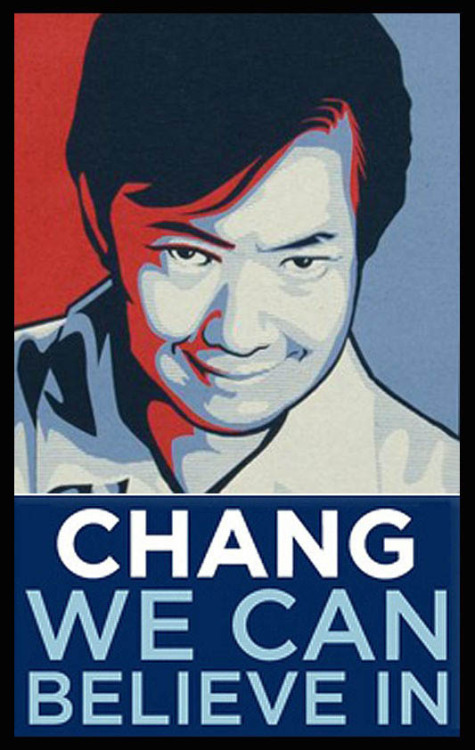
how will the group adapt to the various "chang-es" that present themselves this season?


i missed ben.
source: thewackydeli.tumblr.com


hit the jump, and we'll find out together!


7:30 - hey there! you're early, but thanks for coming! feel free to grab a drink from the fridge and find a spot on the couch - i think there's some space down by the end. feel free to join the conversation! i'm sure we're all pretty jazzed, after all community's return is a dream come true

too much wordplay? deal with it!
source: us HAHA!


7:45 - as per ...prettymuchamovie standards and protocol, tonight's episode is being accompanied by Steamwhistle pilsner, and the Mill street 10th anniversary sampler - that and as per always, some David's Tea.



Shirley's with us on this one
source: communitytropes.tumblr.com


7:55 - it's almost here! squee!

poor squee never exemplifies the feeling that he shares a name with.
source: jhonen vasquez, via umm, somethin'

8:00 - our season premiere gets started with Troy and Abed back from summer? with a laugh track? and "twelve additional thumbtacks?" ha, each of the characters (exclude Abed, and obviously Jeff) has "cool hipster glasses"). it's pretty darned funny.

"we should get to class, where's Pierce?"

and then some dude shows up who's not chevy chase. it's fred willard as Pierce.

any way, this is all actually just a therapy question between Abed and Britta. turns out this previous place was his happy place - thus we get an awesome intro theme song from Abed. great!

...y'know, except for the mix which was terrible.

8:02 - "Abed's community show is filmed in front of a live studio audience in Abed's head."

anyway, here we do with the group actually meeting back up.

Annie and Shirley decide to have senoritis

or, annie says she wants to do it and Shirley wants in. annie wants Jeff though.

(link)

these shots are closer, and weird... and Troy looks older.

Abed keeps getting upset because at mentions of their last year.

8:03 - there's an ice cream class rush, but luckily Jeff has saved room for the study group! he was also wearing hipster glasses, which he hands off to neil when he sees Britta's.

oh look! Britta and Troy are holding hands, there's some snark about this.

8:04 - the dean makes an announcement! databases were hacked! everyone (essentially) is signed up for ice cream class.

there's a super cute "follow me tooooo" scene that culminates in, THE HUNGER DEANS!

8:05 - oh no! news alert! Jeff took extra classes online, and is but one credit from graduating, which was to be the ice cream/only available history class! he wants to take it as the last class together with the group.

Troy wants to team up with Abed, but Abed suggests Troy team up with Britta.
there's a cute interplay between fine and fyne.  it's the latter which actually means "fine."

8:06 - cut to Abed's world. the dean is coming in for a lan-dean, all decked out like an aviator!  but not amelia earheart - hollywood's most attractive aviator, leonardo dicaprio!

(link)

these scenes are too hilarious to keep up with.

anyway, the dean has lost the student records "which were stored in a microsoft paint file, which i was TOLD was future approved!"

as a result, in Abed's happy place, everyone has to repeat the previous three years.

wow. Abed's happy place keeps them there forever!

commercialz.

8:10 - "GENTLEMAN... and ladies" the Dean opens, and the Hunger Deans have begun. Asian Annie Kim is here to fight Jeff, but he fights her off to obtain one.

am i the only one who thinks the dean's unicorn's are eerily reminiscent of rebel and sinbad?

"This is my first ball! New Jeff!" he says, slamming the ball down near Pierce and Abed.

8:11 - Back to Abed's happy place for sitcom-y hijinx. I love it when Abed is losing his shit.

Back in regular world, Shirley and Annie have broken into the Dean's office.

"Now he's going to feel weird. Like someone was here! Let's go," Annie says.

Shirley convinces her to stay and commit an actual prank.
They exchange ideas and settle on filling his car with popcorn.

There's a cute little part where Annie finds the Dean's keys, based on his height in heels.
Jeff breaks in with a ball.

"New Jeff!"
"Jeffrey, is that blood in your shirt?"
"Yeah, it's okay. It's Leonard's."

8:13 - Hmm, there's a cute part with Troy and Britta now. They're at the fountain, trying to make wishes, but she doesn't understand their idiosyncratic rules.

"your rules are stupid"
"they're Abed's rules and they're awesome!"

they end up fighting in the pond, and Britta ends up choking Troy who asks "why does this feel good?"

8:14 - at the dean's car. annie is worried about Jeff being a gross lawyer, Troy and Abed drinking coffee, and her becoming a "boring hospital administrator" which she doesn't really want to do (possibly a call-back to mixology certification?).

the bartender in this episode is tig notaro!  how much more can i possibly love this show?
(link)

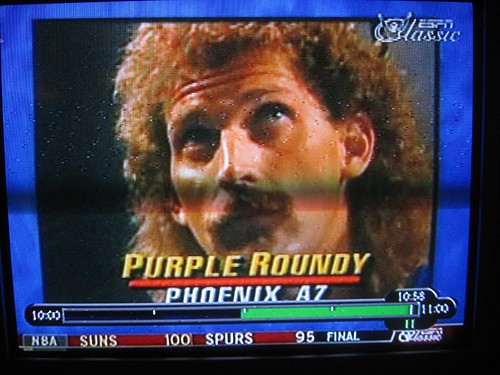
8:15 - back at the hunger deans, Jeff is going all purple roundy and beating the shit out of all of these people in various american gladiator-esque games.


8:16 - the dean throws down a trump card when announcing the next competition! it will require emotional attachment! the tango is the next challenge.

contestants must chose a partner, and Jeff choses the dean!

the dean's unicorns rip off his one dress to reveal another!

"the fountain works!"

8:16 - we cut to the Abed happy place! annie's found out that there's a backup of the student records! in a safe.  shaped kind of like an apple?

meta meta!
(link)


8:17 - back at the tango, Jeff reveals he knows the dean's plan. he doesn't want Jeff to graduate, hence a previously existing history course disappearing.

neil and vickie are dancing too. it's cute.

Jeff wins anyway, and has his third ball.

8:18 - oh SHIT! greendale Abed happy place inception!!!
in Abed's happy place, Britta suggests Abed go to a happy place, and as such, GREENDALE babies is born. i kid you not.

8:19 - commercialz.

8:21 - we're back, and everyone notices that Abed's a little whacked out.  metameta!

the last hunger game is about to begin though, and new Jeff takes off to get the last ball, with annie's permission.

Britta explains and Troy freaks out.

"you told him to go somewhere in his mind? do you know who you're talking to?"

"there is one thing we can try," Troy tells them.

they all hold hands and Troy tries to infiltrate Abed's mind. we see inside Abed's happy happy place, but they can't access him? because of the lack of Jeff?

anyway, conveniently at this time, baby real Jeff decides to go help.

baby Jeff walks in "you know what guys, i have something to say"

"like always!" the babies say in unison!

in Abed's happy place, Jeff makes a speech, and Abed feels better while an ad for "blind blonde" a show that features Annie and Britta is advertised on the bottom.

anyway, Abed snaps back to reality.

"that was a killer speech, Jeff," he says.

"i didn't say anything,"Jeff tells him.  apparently he just walked up about four seconds ago.

8:24 - Abed apologizes to Troy for missing the fountain, then Troy explains that Britta's implemented a new rule: no rules. Abed says they can talk about it.  which pretty much means "hell fucking no."

8:25 - in the jeff's hallway, we find out the dean is totally going to offer another history class "or we lose like, 40, 000 dollars in grant money"
i mean, because he totally loves Jeffrey!

oh, then it turns out the dean has bought the condo across the hallway.  they're almost-roomies!

"oh, you've got wine? i've got friends with benefits - no subtext there," says the dean, tapping his nose/open mouth.

8:26 - cut a mailman outside being handed a wet, wrinkled paper by a naked man.

"my name is kevin. i have changnesia"

the camera pans back, and a naked chang is revealed, standing before the man.

commercials.

8:29 - the post credits, Troy and Abed appear in drag, on their way to antics 101.

"are you sure this is going to work?" says Troy
"of course. it's antics," responds Abed.

the dean shows up to stop them from entering - because he wants to ask them where they got their dresses!  however, he is quickly distracted by the need to stop britta from entering the classroom. he knows a man when he sees one!  shirley opens the door and confirms this in a booming voice, winking to let us know she is in on the shenanigans.  oh, Abed!

Read More
Posted in #sixseasonsandamovie, 2.7.2013, community, community liveblog, february 7 2013, fun, live blog, liveblog, october 19, premiere, recap, six seasons and a movie, yay | No comments

Wednesday, 6 February 2013

The Art of the Artist Interview

Posted on 18:28 by Unknown

A profile of Hans Ulrich Obrist
by Ross Simonini

Over the past two decades, the art curator Hans Ulrich Obrist has conducted and recorded more than 2,000 hours of conversations in service of his Interview Project. It's an archive he will continue to grow throughout his life and it contains dialogues with the world's leading artists, thinkers, architects, scientists, engineers, musicians, and writers. He has likened his mission to that of radio host, Studs Terkel, who, at his death in 2008, had collected 10,000 hours of oral histories. 

Obrist is currently, hands down, the world's most prominent curator. He is the co-director of the museum-sized Serpentine gallery in London, a contributing editor at 032c magazine and a founder of the Brutally Early club, a loose group of culturally active types who meet in coffee shops at dawn around the world. He has a blazingly peripatetic lifestyle: "From 1991 to 2000 I was nomadic," he says. "I travelled 300 days a year." He lectures internationally, lives bi-continentally,  and attends what seems like every art fair and biennial. Three years ago, at the age of 41, he was dubbed the most powerful person in the art world by ArtReview magazine. 

In school, Obrist studied social studies and politics. He discovered his love for art in his early 20s, through two now-classic books of interviews: Brutality of Fact: interviews with Francis Bacon by David Sylvester and Dialogues with Marcel Duchamp by Pierre Cabanne, both in-depth, long-term conversations on the career of an enigmatic subject. "These books somehow brought me to art," he has said. "They were like oxygen, and were the first time that the idea of an interview with an artist as a medium became of interest to me. They also sparked my interest in the idea of sustained conversations—of interviews recorded over a period of time, perhaps over the course of many years; the Bacon/Sylvester interviews took place over three long sessions, for example."

Obrist has placed himself in the lineage of Cabanne and Sylvester, and interviews his subjects repeatedly (e.g.  Jeff Koons and Phillipe Pareno). He views his work as that of a relentless archivist, and carries his video camera with him constantly, never certain when an interview may begin. (Filmmaker Jonas Mekas inspired him to use a camcorder, rather than an audio recorder, for documenting his talks.) Obrist also finds inspiration in Andy Warhol, who compulsively recorded his own life on a tape recorder and founded Interview magazine; and, of course, Terkel, who once gave him tips about embracing the art of imperfection in an interview. Like all his predecessors, excerpts from Obrist's project are often released in print, and become transposed from oral history to literature. His publications, so far, include two 1000-page anthologies, HuO: Hans-Ulrich Obrist: Interviews vol.I-II, and the 21 volumes released as a series by Walther Konig Books: novella-length interviews with artists including John Baldessari, Robert Crumb, Wolfgang Tillmans, and Rosemarie Trockel. But much of the project remains unpublished.

As an interviewer, Obrist is no longer an anonymous question-pepperer but a figure who is often better-known than his subjects. Like Charlie Rose, Barbara Walters, and James Lipton, his personality (and project) is inextricably present in the interview.  Marina Abramovic, the endurance-performance artist, described Obrist as "sleepless, restless, obsessed, possessed, art, olympic, runner, volcanic, mind-blowing, limitless." When he lectures, he appears incapable of stillness, his hands dancing in front of him, his weight shifting from foot to foot, his shoulders pumping like eyebrows, adding emphasis to every phrase. He speaks quickly, in a thick Swiss-german accent, and has the look of a brainy scientist: semi-transparent glasses and puffs of cotton candy hair atop a gleaming melon of a head. 

Obrist has said that interviewing cultivates empathy and allows him "slowness."  He seems earnestly consumed by conversation. He smiles as he questions, a perpetual, somewhat purposeful-looking grin that might just be the way his mouth is formed. He is never at a loss for words. For a voracious student of culture, the interview is an opportunity to listen and ask without the need for production or the weight of profession: interviewing generates just enough money to cover his transcription fees. 

Before an interview, Obrist likes to get to know his subjects informally and formally. He socializes with artists, an act uncommon among many curators, and reads everything he can find about a person's work. Then the interview itself begins, extemporaneously: after few friendly conversations, once the "atmosphere is there," Obrist will place his handheld video camera on its little tripod, point it at his subject and through dialogue, try "to understand the forces effective in visual arts" (a phrase he uses often). "At some point during the interview I very often throw overboard a lot of the preparations and go into freestyle," he says, 'but I can do it because I’m prepared and if I don’t prepare I don’t have the confidence to do that, so I need to over prepare to then be free." 

He seeks to discuss topics the interviewee hasn't discussed publicly, such as his interview with Gerhard Richter on the subject of architecture. He almost always asks about an unrealized project. "A lot of practitioners have unrealized dreams which they would like to realize but of which they never talk," Obrist says. "I’ve very interested in this idea. ‘What actually are our dreams?’ Because that can make them happen. That is the only recurring question in all my interviews."


In 2005, Obrist began the Marathon interview series, an event in which 50 public interviews are conducted, often for 24 non-stop, sleepless hours. Some of the marathons have been co-conducted by architect Rem Koolhaus, with whom Obrist has an ongoing dialogue. The marathon's format was "inspired by open air music festivals--the idea being that people would come and go and fall asleep and the conversation would always be going," and Obrist has held poetry marathons, map marathons, manifesto marathons, and experiment marathons using the same format (though not all marathons are 24 hours long). 

Obrist views the art world as the contemporary equivalent to Sergei Diaghilev's view of ballet in the early 20th century: a receptive venue to all the arts.  The art world is often thought to be an insular, elitist place, and in many ways this is undeniable: the thick, inscrutable rhetoric in Artforum and artist statements seems cogent only after its reader has attended a graduate program in art history; and any art work of moderate interest is available only to a very small population with a very large, very disposable income. But images themselves are democratic, galleries are free to all, and in the last century, art has become an impossibly inclusive term: sculpture, design, film, music, dance, new media, philosophy, and countless performance styles exist comfortably under its umbrella.

"From art I went into science," Obrist says, "from art I went into music; from art I went into literature; from art I went into architecture. And gradually it is like a concentric circle, it goes from the art world to all these other worlds, and then, from there, it goes into the multitude." 

In his view, curation can include all disciplines, venues, and approaches. Fittingly, Obrist's first exhibition was birthed from an interview:  after a three-way discussion on expanding boundaries in curation with the artists Fischili and Weiss, Obrist decided to curate a show with the duo inside his Berlin apartment. Since then, he has shown Christian Boltanski in airplanes and Gerhard Richter in Friedrich Nietzsche's house. He organized a "conference with no conference," which he describes as one long coffee break, and he curated Do It, a traveling exhibition in which artists provided instructions for works that could be installed by anyone, anywhere.  Obrist's new Marathon series are a push against the organization of space and objects--what gallery curation normally is--and an attempt to curate "temporalities."   

The first Marathon occurred in Stuttgart, and events have followed in Berlin, Beijing, and London, the last of which is being released in a 376-page book, The London Dialogues. It reads like pure documentation, a long stream of Q&As. While precise time is given for each conversation (an example of Obrist's attention to temporality), there are no introductions for any of the interviewees--no info on their professions or areas of expertise. Ultimately, the subject is not the interviewee, but London. Obrist wants to "make a portrait of a city" and the book is presented as a continuous, uninterrupted conversation on this topic--a marathon for Obrist; a relay for the subjects, who pick up where the previous conversation left off.

Though the interviews appear like documentation, they do seem edited. Utterances of "uh" and "like" and "um" are missing from all speech, a phenomenon that, even among the well-spoken art-class of London, seems dubious. This is only to say that the book is not pure, unadulterated documentation, but a refined literary object. While Warhol's transcribed novel, A, was unedited to the point of unreadability, London Dialogues is a cultural text to be read, used, referenced. (Warhol's novel was so pure that it could only be read a manifestation of an ideology.)  Obrist is a passionate reader and knows that for the act of reading to be successful, the content must be shaped and served cleanly.  

Most likely, the readability of his archive will be Obrist's most lasting achievement. 2,000 hours of interviews marks only the start of the project, and as those interviews are quoted and excerpted, the Interview Project will see its rebirth in monographs and biographies and academic texts in every field. His documentation will become fact, and his field will swell to embrace the curation of history.

Read it at Hazlitt

Read More
Posted in | No comments

Monday, 4 February 2013

Blood Pillow's Essential Rumi

Posted on 11:16 by Unknown
Listen to the third installment of Blood Pillow, the radio collage I make with fellow Believer editor, Andrew Leland.

Read More
Posted in | No comments

Saturday, 2 February 2013

Michael Fassbender

Posted on 15:49 by Unknown

Read More
Posted in | No comments

Posted on 09:41 by Unknown


Listen to episode one of the Believer's new radio show
Produced by Ross Simonini
Hosted by Andrew Leland

Read More
Posted in | No comments

Friday, 1 February 2013

Interview with William Pope L. for Interview magazine

Posted on 09:38 by Unknown


In the late '70s, the performance artist William Pope.L famously crawled along 22 miles of sidewalk, from the beginning to the end of Broadway, Manhattan's longest street, wearing a cape-less Superman outfit with a skateboard strapped to his back. In varying fits and starts, the performance (titled, The Great White Way) took 5 years to complete, with each installment lasting as long as Pope L. could endure the knee and elbow pain (usually around 6 blocks). It is among forty-plus "crawl" pieces he has performed in his 33 years of work as an artist.

The pictures of the defamed superhero dragging himself through the business district are among the clearest and most iconic images in Pope L.'s oeuvre, but for him, the documentary image isn't as essential as the actual experience of  exhaustion and self-imposed shame that come along performing the work. For this reason, the 57 year old artist often invites participants to collaborate with him, organizing large group crawls and interactive installations that require viewers to contribute traditionally African-American materials (hair picks, soul records, etc.). This coming June, with the help of local citizens, he plans to pull, by hand, an eight-ton truck 45 miles through the streets of Cleveland for 72 hours straight (with alternating teams). It's a follow-up to his piece,"Blink" in which volunteers pulled an ice cream truck, lit up with projected photographs of the city, from 6pm to 6am, in a post-Katrina New Orleans. Such performances live in the space between the work of a shaman and that of a community organizer, mobilizing locals and attempting to heal society through abstraction of grand themes such as labor and identity politics. 

Other classic Pope L. performances have included Eating the Wall Street Journal, which he did on a toilet, to allow the paper to pass through him, transformed, and his copyrighting of his personal slogan: "The Friendliest Black Artist in America©." He also makes photographs, sculpture, writings, and paintings, often using a variety of white-food-based materials: RediWhip, mayonnaise, flour, milk. His new book, 'Black People are Cropped' was recently published by JPR Ringier and chronicles his fifteen-year, ongoing drawing series called “Skin Set” - a project with a poetic and absurd perspective on human skin color.  The book contains his bright crayons scrawlings of pseudo-stereotypes - "Red People are Boner Cosmic" and "Green People are Shitty," and a philosophical essay-poem on sociology."Blackness is a lever for me to talk about otherness," he says. 
 
In the spring, Pope.L will have an exhibition he describes as "an ambiloquy, a discourse on ambiguity" at The Renaissance Society in Chicago, his current home. In December, I spoke to him via email, at his request, and later, on the phone. - Ross Simonini


ROSS SIMONINI: Is your work a form of activism? 

WILLIAM POPE.L: When people use the word activism today it sounds like after-ism—something you do after, reactionary, back-sterism, something you do backwards. The space I create in my work for others is more formalist, like, "change the world" or "change the frame on that painting."

SIMONINI: Do you want to change the world?

POPE.L: I think that corporations and states have actually co-opted that phrase. I guess that phrase would be connected more to the ’60s. And I think, initially when I was using it, maybe 20 to 25 years ago, co-optation wasn’t as clear or formidable as it is now. You have to respond to your times. But I think that phrase is connected to the idea of art transforming anything or the idea that radicality in small things is a revolution or the concept of being able to make a life less onerous by offering opportunities to that life.

SIMONINI: Is this what you mean when you say you want your work to be "socially responsible"?

POPE L.: Obama charms when he speaks of social responsibility, but in the art world today it's not sexy. A sexier phrase might be social networking. What is the difference between social responsibility and social networking? Well, the former requires that you show up, and the latter requires that you might have to buy an app for showing up.


SIMONINI: How did your thinking about “The Great American Way” change over the five years it took to complete? 

POPE L.: One of the problems with time-based endurance performances like my crawl works is they have this marvelous creamy nougat center operating inside the performer and this space is unfortunately not available in the images and mythologies that surround the work. So, typically the surface of the work becomes the life of the work. Most folks only get the neatness of the feat. How many miles? How much pain? How many people said or did not say this or that? I am not interested in that.

SIMONINI: Did you enjoy crawling through the streets? Do you enjoy making the work in general? Or is it not about enjoyment? 

POPE L.: No, I did not enjoy crawling. Overall, I enjoy making work with others. I enjoy the small moments of revelation that are only possible in the company of others. I enjoy making a clear puzzle. I realize more and more that making is un-making. To make something is to un-do it. To make something is to make it less mysterious, that is, in the process of removing a veil, one of many. You gain more intimacy but it may not be very pleasant. 

SIMONINI: Why did the crawl pieces change from solo crawls to group efforts [such as the crawl to the Abyssinian Church in Portland, Maine on October 5, 2002]

POPE L: From its very earliest beginnings, the crawl project was conceived as a group performance. Unfortunately for me, at that time I was the only volunteer. Sharing the pain, as it were, allowing the experience of public prostration in motion to be public in a larger way, across more than one body, created a stronger argument for the work as a means not just an anomaly. The work's initial strangeness as a solo activity made it more attractive to the art world because it took on a more object-like character, more personal and maverick. But for me, it was always just another convention. And gloriously so. What is more conventional than crawling?

SIMONINI: When you mobilize a group of people, as you will be in your upcoming "Pull!" performance, are you trying to transform these people? 

POPE L.: Do I think you can change people by enlisting them in pulling a truck by hand 45 miles when it would be so much easier to drive it? No, no, no. And, sure I create the opportunity, but people do the changing themselves. So, is it change that's going on here? Or something that was always there but was just looking for a place to light?

SIMONINI: Why pull a truck?

POPE.L: Well, it’s a 1987 GNC step van. It’s a kind of all-purpose vehicle that’s still in use by, for example, UPS. It's sort of a workhorse and I think it’s symbolic of a certain backboned industrial use. And what we’re going to do with it is we’re going to basically treat the surface of the truck with writings. We’re doing all kinds of research about employment within the state of Illinois and Ohio and we’re gonna actually post job opportunities for people.

SIMONINI: How would you describe the situation of Cleveland these days?

POPE L.: Well, I think they’re fighting against an image problem, countering the self-image of “The Mistake on the Lake,” as they talk about it. There’s a sense of malaise in the city. I think Cleveland is about a kind of constant sense of having to pull yourself up by your bootstraps. That, of course, is the sense among many American cities. But I didn’t want to only have a bootstrap project. I wanted to have a project that was also going to be very practical, because what we’re doing is in response to a lot of the talk about employment problems in the city and the quality of the jobs. So we’re going to actually pay people to pull.

SIMONINI: You're making jobs.

POPE.L: The pulls have been based on volunteerism. But what I found, for example, in New Orleans, where we did the first pull  after Katrina and the oil spill, was that people who would like to be involved in a project like this cannot because they’re looking for work. Or because they think in some way it’s anti-work. You know, it’s art. 

SIMONINI: Right.

POPE.L:  It’s also, I think, a very material, formal issue in terms of, What do you do with the capital that you have? Do you use it to create some kind of visual, formal interpolation, that has its own raison d’être? For example, let’s say, bringing people into a project who maybe could not otherwise participate. So I see that as a formal choice. I know it has social implications as well, but I also see it as a way of shaping the visual life of the work. Because that means, if you spend that money to get people involved in the work, you can’t then spend it on—I’m not going to say, “decorative,” per se, but the visual effects that you’re going to achieve are going to be in proportion to that choice. 

SIMONINI: Would you say that a viewer has only truly experienced one of your works if she has participated in it? 

POPE.L: That’s an interesting question. Some people, for example, are interested maybe in what it looks like: how many people participated? Did people like it? Did people not like it? But I believe in questions like, how did the work interact with the community? You know, what were some of the discussions that came up in terms of the creation of a work? Were some of the choices you made based on feedback you received from the community regarding what kind of work they wanted? It’s not that the work is gonna be a slave to the community, but some works are much more porous to community opinion than others.

SIMONINI: Do you think about this community-based work as being within any kind of lineage?

POPE L.: Perhaps with what some of the constructivists in the ’20s were thinking about, in terms of a desire to create works that have to do with the fabric of what people do every day, specifically, labor. It also connects with fluxus. George Maciunas [fluxus artist] was very clear that art had to do with labor. That’s why he was involved in real-estate activism [Maciunas transformed several, ramshackle loft buildings in SoHo into live-work "Fluxhouse" co-ops]

SIMONINI: Do you feel like any of this work is autobiographical, or do you think it’s not important that you be viewed as its author?

POPE.L:  I know in art there are these tendencies to want to disappear the author, but you are the driver of this thing. It's just like a small corner store: to say that I am not important to the work in terms of being the one who wakes up and opens the store in the morning and closes it in the evening when no one wants to—I mean, that would be silly and, actually, inaccurate to disappear myself. What is important is to try to bring as many of the participants as you can, and actors and performers, if you will, into the work to put pressure on your own participation, so that one day, perhaps, I will not be as operative in it. But in most cases, practically speaking, that’s not currently in most of the models I know, that’s not possible, because of practical reasons, in many cases. I mean, even if, theoretically, you want to totally disappear yourself, I think the problem would be: Can you? 

SIMONINI: How were you introduced to performance art? 

POPE L.:  My earliest performances were in undergraduate school. They came out of making a set of works called communication devices. I was attending Montclair State University [Montclair, New Jersey], but back then, I believed that the work had to have an answer, had to possess an answer, had to have it in its grasp like a real object. And I thought all I had to do was make enough of these things, these performances, and I'd find the answer. Of course, I was wrong.

Read it at Interview


Read More
Posted in | No comments

Amanda Seyfried

Posted on 09:35 by Unknown

Read More
Posted in | No comments
Newer Posts Older Posts Home
Subscribe to: Comments (Atom)

Popular Posts

  • (no title)
  • (no title)
  • movie review: the cable guy.
  • six seasons and pretty much a movie: community finale liveblog!
  • Bull Neck
  • the amazing spider-man...pretty much a recap! cinema report!!!
  • game of thrones season two liveblog! episode eight: the prince of winterfell
  • game of thrones season two liveblog! episode six: the old gods and the new.
  • game of thrones season two finale liveblog! episode ten: valar morghulis
  • (no title)

Categories

  • #faceoff (1)
  • #LoneWolf (1)
  • #ManOfAction (1)
  • #PreyOnAndrea (1)
  • #sixseasonsandamovie (1)
  • 03-june-12 (1)
  • 04-nov-12 (1)
  • 06-may-12 (1)
  • 10 March 13 (1)
  • 10-feb-13 (1)
  • 11-nov-12 (1)
  • 13-may-12 (1)
  • 14-oct-12 (1)
  • 17 March 13 (1)
  • 17-may-2012 (1)
  • 18-nov-12 (1)
  • 1996 (1)
  • 2-dec-12 (1)
  • 2-feb-13 (1)
  • 2.7.2013 (1)
  • 20-may-12 (1)
  • 2010 (3)
  • 2011 (3)
  • 2012 (14)
  • 2013 (2)
  • 2013 Oscars (1)
  • 21-oct-12 (1)
  • 22-april-12 (1)
  • 24-feb-13 (2)
  • 24-March-13 (1)
  • 25-nov-12 (1)
  • 27-may-12 (1)
  • 28-oct-12 (1)
  • 29-april-12 (1)
  • 3 March 13 (1)
  • 3-july-2012 (1)
  • 31-March-13 (2)
  • 3D (1)
  • 50/50 (1)
  • 85th (1)
  • 85th Academy Awards (1)
  • a man without honor (1)
  • ablism (3)
  • Academy Awards (1)
  • adaptation (22)
  • alzheimer's (1)
  • amanda seyfried (1)
  • amc (4)
  • amitabh bachchan (1)
  • andrew garfield (1)
  • anniversary (1)
  • appropriation (1)
  • Arrow on the Doorpost (1)
  • atom egoyan (1)
  • attack the block (1)
  • award shows (1)
  • awards (1)
  • battle (1)
  • baz luhrman (1)
  • ben stiller (1)
  • best dressed (1)
  • best episode ever (1)
  • blackwater (1)
  • bridesmaids (1)
  • canada (1)
  • canadian (2)
  • cancer (1)
  • carey mulligan (1)
  • christoph waltz (1)
  • cinema report (1)
  • comedy (3)
  • comic book (2)
  • comics (3)
  • community (2)
  • community liveblog (1)
  • digital estate planning (1)
  • django unchained (1)
  • drama (1)
  • dramedy (1)
  • dudebro (1)
  • emma stone (2)
  • episode 6 (1)
  • episode 7 (1)
  • episode 8 (1)
  • episode 9 (1)
  • february 7 2013 (1)
  • fuck yeah (2)
  • fun (1)
  • game of thrones (12)
  • game of thrones season three (1)
  • game of thrones season two (10)
  • garden of bones (1)
  • gender (15)
  • gore (10)
  • greenberg (1)
  • greta gerwig (1)
  • guillermo del toro (1)
  • happy one year (1)
  • heterosexism (2)
  • high school (1)
  • home (1)
  • horror (14)
  • hounded (1)
  • i'm jaqen it (1)
  • imax (1)
  • introduction to finality (1)
  • jamie foxx (1)
  • jessica chastain (1)
  • joseph gordon-levitt (1)
  • julianne moore (1)
  • kerry washington (1)
  • leonardo dicaprio (2)
  • lgbt (3)
  • liam neeson (1)
  • live (1)
  • live blog (9)
  • liveblog (26)
  • made to suffer (1)
  • mama (1)
  • marc webb (1)
  • montage (1)
  • movie reviews (7)
  • movies (1)
  • nikolaj coster-waldau (1)
  • not very good (1)
  • october 19 (1)
  • one year anniversary (1)
  • oscars (2)
  • Oscars Liveblog (1)
  • Oscars Recap (1)
  • parent-child relationships (1)
  • photographs (5)
  • poc filmmakers (1)
  • premiere (1)
  • pretty much a trailer (5)
  • Prey (1)
  • race (10)
  • racism (15)
  • rape (4)
  • recap (20)
  • recap race (1)
  • recap sexism (1)
  • revenge (1)
  • rhys ifans (2)
  • saturday night live (1)
  • sci-fi (1)
  • season finale (2)
  • seth rogen (1)
  • sex (7)
  • sexism (12)
  • sexual violence (9)
  • sexuality (3)
  • siblings (1)
  • sick (1)
  • six seasons and a movie (1)
  • sixseasonsandafinale (1)
  • sixseasonsandamovie (1)
  • sort-of-a-movie (17)
  • spoiler (1)
  • SPOILER ALERT (1)
  • spoilers (13)
  • stuff (2)
  • stuff and thangs (2)
  • tarantino (1)
  • tdkr07202012 (1)
  • thangs (2)
  • the amazing spider-man (2)
  • the cable guy (1)
  • The Dark Knight Rises (1)
  • the first chang dynasty (1)
  • the ghost of harrenhal (1)
  • the great gatsby (1)
  • the night lands (1)
  • the north remembers (1)
  • the old gods and the new (1)
  • the prince of winterfell (1)
  • the suicide king (1)
  • the walking dead (11)
  • The Walking Dead Clear (1)
  • the walking dead liveblog (7)
  • the walking dead season three (16)
  • thegreendaleseven (1)
  • this sorrowful life (1)
  • tobey maguire (1)
  • toronto (1)
  • trailer review (4)
  • trans-racial adoption (1)
  • valar dohaeris (1)
  • valar morghulis (1)
  • violence (9)
  • walk with me (1)
  • walking dead season 3 (1)
  • welcome to the tombs (1)
  • what is dead may never die (1)
  • when the dead come knocking (1)
  • Woman Characters (3)
  • women (1)
  • women characters (19)
  • women filmmakers (4)
  • works on paper (7)
  • writings (7)
  • yay (1)
  • zombies (4)

Blog Archive

  • ▼  2013 (28)
    • ▼  March (10)
      • Game of Thrones Season 3 Liveblog! Episode One: Va...
      • The Walking Dead Season 3 Liveblog! Episode 16: "W...
      • The Wall Street Journal on The Believer
      • My interview with Rirkrit Tiravanija for Art in Am...
      • The Walking Dead Season 3 Live Blog! Episode 15: T...
      • The Walking Dead Season 3 Liveblog! Episode 14: "P...
      • The Walking Dead Season 3 Liveblog! Episode 13: Ar...
      • The Rhetorical Bed: Episode 2 of the Organist
      • Eddie Martinez's Matador at The Journal opens tonight
      • The Walking Dead Season 3 Liveblog! Episode Twelve...
    • ►  February (14)
    • ►  January (4)
  • ►  2012 (172)
    • ►  December (4)
    • ►  November (7)
    • ►  October (6)
    • ►  September (2)
    • ►  August (18)
    • ►  July (13)
    • ►  June (16)
    • ►  May (26)
    • ►  April (24)
    • ►  March (18)
    • ►  February (21)
    • ►  January (17)
  • ►  2011 (139)
    • ►  December (13)
    • ►  November (17)
    • ►  October (30)
    • ►  September (13)
    • ►  August (37)
    • ►  July (10)
    • ►  June (3)
    • ►  May (4)
    • ►  April (3)
    • ►  March (4)
    • ►  February (1)
    • ►  January (4)
  • ►  2010 (43)
    • ►  December (8)
    • ►  May (6)
    • ►  April (19)
    • ►  January (10)
  • ►  2009 (18)
    • ►  December (11)
    • ►  July (7)
  • ►  2008 (20)
    • ►  November (4)
    • ►  October (4)
    • ►  September (12)
Powered by Blogger.

About Me

Unknown
View my complete profile